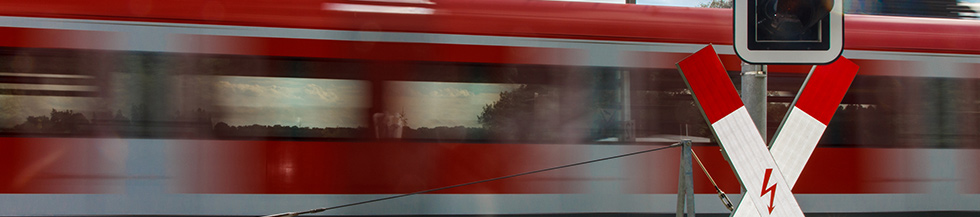
Case Study: DSP – Radar Scanner for Level Crossings
Industry: Personnel Safety / Railway Technology
Initial Situation
Our client, an international technology provider, developed a radar system for automated object detection at level crossings. The challenge: a safety-critical product with railway certification that had to remain available and maintainable for decades. The project required not only robust electronics but also long-term component management and the highest safety standards (SIL3, EN 50129).
D.SignT Solutions
D.SignT handled the complete development and manufacturing of the radar DSP modules and the associated DSP base software:
- Prototype and series development of the DSP radar modules
- Development of self-test routines and drivers for the DSP and peripheral devices
- Follow-up contract: Development and manufacturing of a redundant control board
- Stocking and management of discontinued components to ensure 20-year product availability
Result
- Robust, certified system in use by Deutsche Bahn
- Significant reduction of risks at level crossings through automatic obstacle detection in all weather conditions
- Plug-and-play functionality with comprehensive self-diagnosis
- Long-term supply availability through proactive component management
Schematic layout at the level crossing

Conclusion & Outlook
The radar scanner has proven to be a reliable solution for safety-critical applications in the railway sector. The close cooperation between the client and D.SignT not only enabled rapid readiness for series production but also ensured the long-term viability of the product lifecycle—extending well beyond the legally required 20 years.
Application Note
The radar scanner detects objects between level crossing barriers using a rotating FMCW radar; it is SIL 3-certified, EBA-approved, operates in all weather conditions, and reliably prevents false clearance signals.
It is designed for reliable operation under varying weather conditions and for safety-critical applications.